

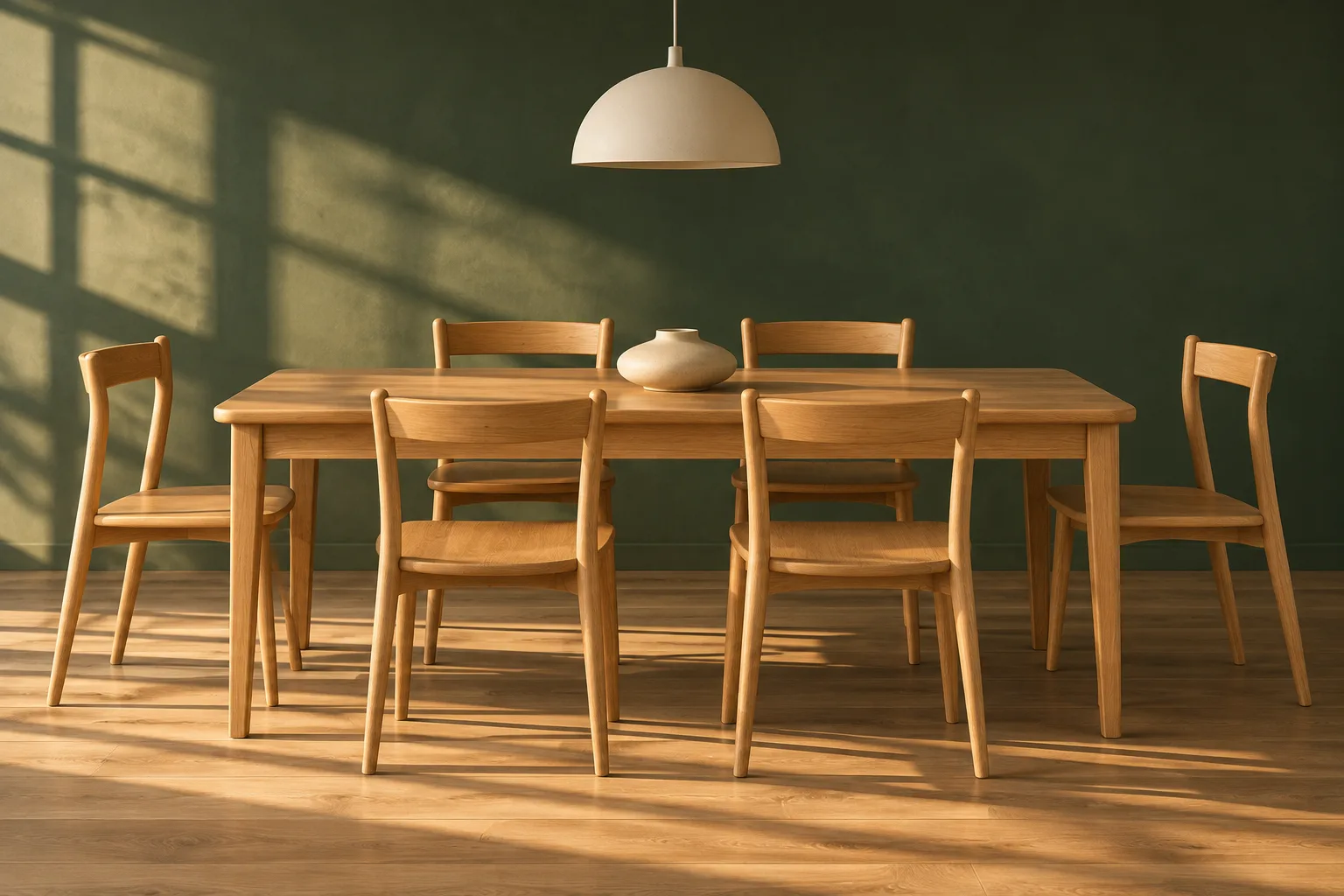
Our tables, beds and storage are solid white oak, solid American walnut or ash stained black, finished with a matte oil. Oil soaks into the wood rather than sitting on top as a film, so the table feels like wood, not plastic, and a scratch or a ring can be repaired at home instead of refinished in a workshop.
The trade-off is that oiled wood wants a little attention: a cloth every week, a coaster under a glass and a new coat of oil about once a year. Here is all of it, in the order you will need it.
Every day
Wipe the surface with a soft cloth wrung out in water, then dry it with a second cloth. A drop of mild dish soap in the water takes care of grease. Wipe along the grain, not in circles.
- A damp cloth and a dry one, nothing more
- No all-purpose sprays, glass cleaners or microfiber with cleaning chemicals
- No silicone furniture polish: it sits on the oil and makes re-oiling harder
Spills and rings
Wipe a spill up straight away. The oil keeps water out for a while, not forever, and wine, coffee and vinegar will mark the wood if they sit overnight.
A white ring from a glass or a hot dish is almost always moisture trapped in the oil, not damage to the wood. Leave it alone for a day or two, and it often fades by itself. If it doesn’t, rub it lightly with a little furniture oil on a soft cloth, along the grain. A dark ring means water reached the wood; that needs the light sanding below. Put coasters and trivets on the Arden for the first months, while the oil cures fully.
Light, heat and air
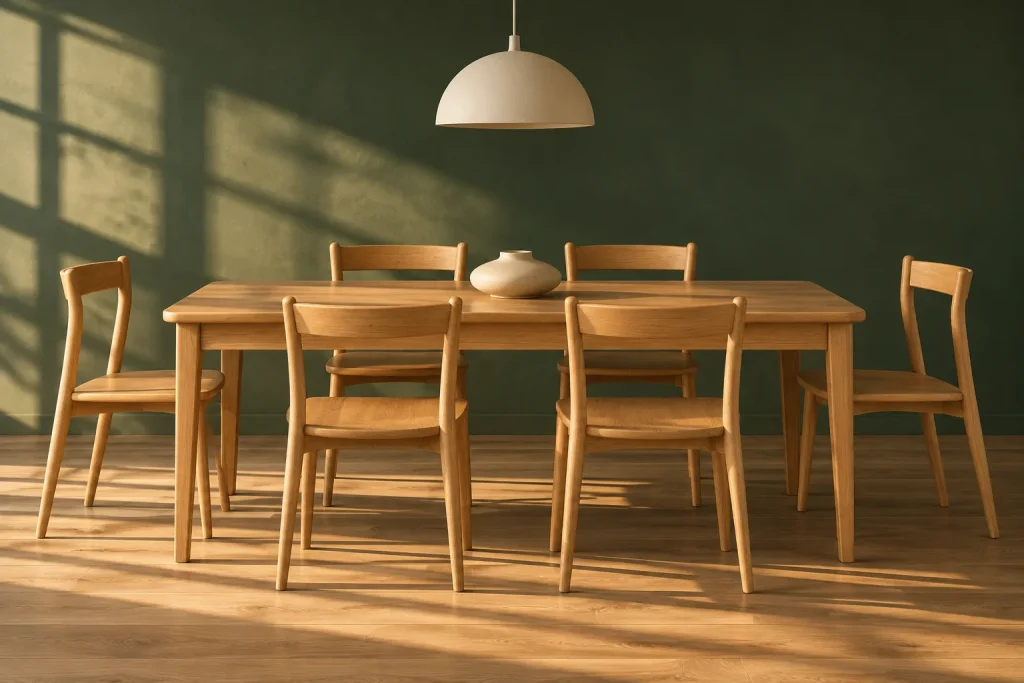
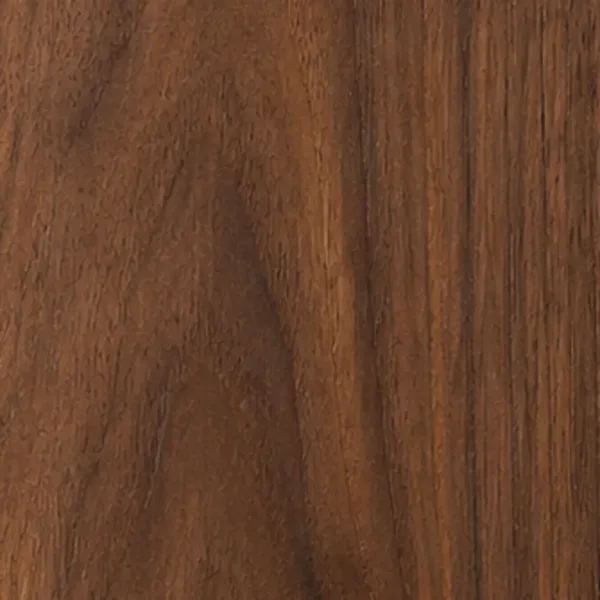
Wood changes color in daylight, and the two woods go opposite ways. Oak warms toward honey in its first year. Walnut lightens a little and turns from chocolate toward a warmer, more golden brown. Both happen fastest in direct sun, so move lamps, bowls and runners now and then, or the table will keep their outline.
Keep solid wood away from radiators and heating vents, and out of air that is very dry. Wood moves with humidity: a little gap between boards in winter and a tight fit in summer is normal, and is why the leaf of an extending table can be stiff for a few weeks after the heating comes on. Indoor humidity between 35% and 55% suits it best.
Once a year: a new coat of oil
When water stops beading on the surface, or the wood looks dry and pale where you eat, it is time for oil. It takes an afternoon and a night to dry.
- Clean the surface and let it dry completely
- Sand any rough spots lightly along the grain with 320-grit paper
- Wipe on a thin coat of a matte furniture oil with a lint-free cloth
- After 15 minutes, wipe off everything the wood hasn’t taken in
- Leave it 24 hours before you set the table
Oily rags can heat up and catch fire as they dry. Lay them flat outside to dry, or keep them in a sealed metal can of water, before you throw them away.
Black-stained ash
Our black finish is ash stained black and oiled, so the grain still shows through. Care for it the same way. A deep scratch can show the lighter wood under the stain; a black furniture wax pencil hides it. The Wren Dining Chair in Black takes the most knocks of anything we make, and wears it well.
Scratches and dents
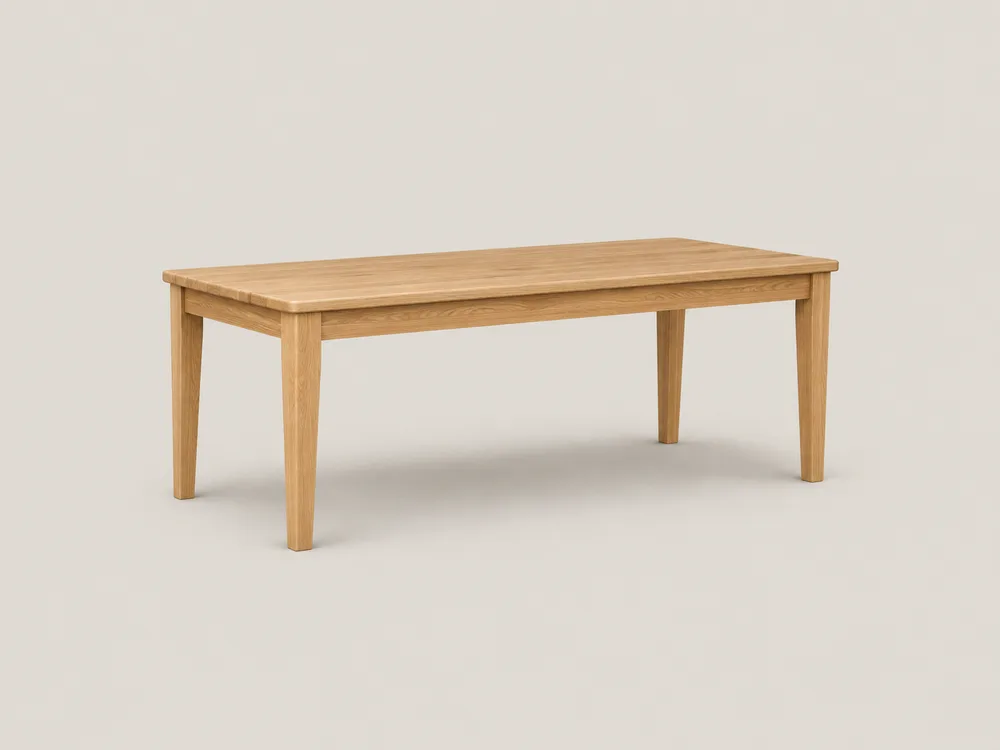
A light scratch in oiled wood usually disappears with oil alone. A deeper one can be sanded out along the grain with 320-grit paper and oiled again; the patch blends in within weeks. A small dent can sometimes be raised with a damp cloth and a warm iron held over it for a few seconds. If anything on your Strand Sideboard or table needs more than that, send us a photo and we’ll tell you what to do.



2 responses
Author
A glass left a white ring on our oak table overnight. Is it ruined?
Author
Almost never. A white ring is moisture in the oil, not in the wood: let it dry for a day or two, then rub it lightly with a little oil on a soft cloth. If it is still there after a week, send us a photo.
Comments are closed.